Why is my child still skinny despite eating a lot?” is a common question among many parents. Some children finish their meals and eat regularly, yet their weight gain remains slow or they still have a relatively slim build.
In reality, eating a lot does not necessarily mean a child is getting enough nutrition. A child’s weight can also depend on the quality of their diet, energy needs, nutrient absorption, overall health, and level of physical activity.
So, why is a child still skinny despite eating a lot?
Is It Unusual for a Child to Eat a Lot but Still Be Skinny?
Not every skinny child is necessarily lacking nutrition. Every child has a different growth pattern. Some children gain weight quickly, while others grow taller faster and gain weight more slowly. Therefore, instead of simply looking at whether a child is “skinny or chubby,” parents should monitor their child’s height, weight, and growth trend over time.
If your child is healthy, active, eats well, and grows steadily, having a slim build may not necessarily be a cause for concern.
1. Your Child Eats a Lot but the Diet May Not Provide Enough Nutrients
A meal that is large in quantity but lacks balance may still not meet a child’s nutritional needs.
For example, a child may eat a full bowl of rice or porridge, but the amount of meat, fish, eggs, vegetables, or appropriate sources of healthy fat may be too small.
Therefore, when assessing a child’s diet, parents should not only ask, “How much does my child eat?” but also consider, “What is my child actually eating?”
A balanced meal should include a variety of:
-
Carbohydrates: Rice, porridge, potatoes, grains, etc.
-
Protein: Meat, fish, eggs, and other age-appropriate protein sources.
-
Vegetables and fruits.
-
Healthy fats suitable for children.
-
Milk and dairy products, when appropriate.
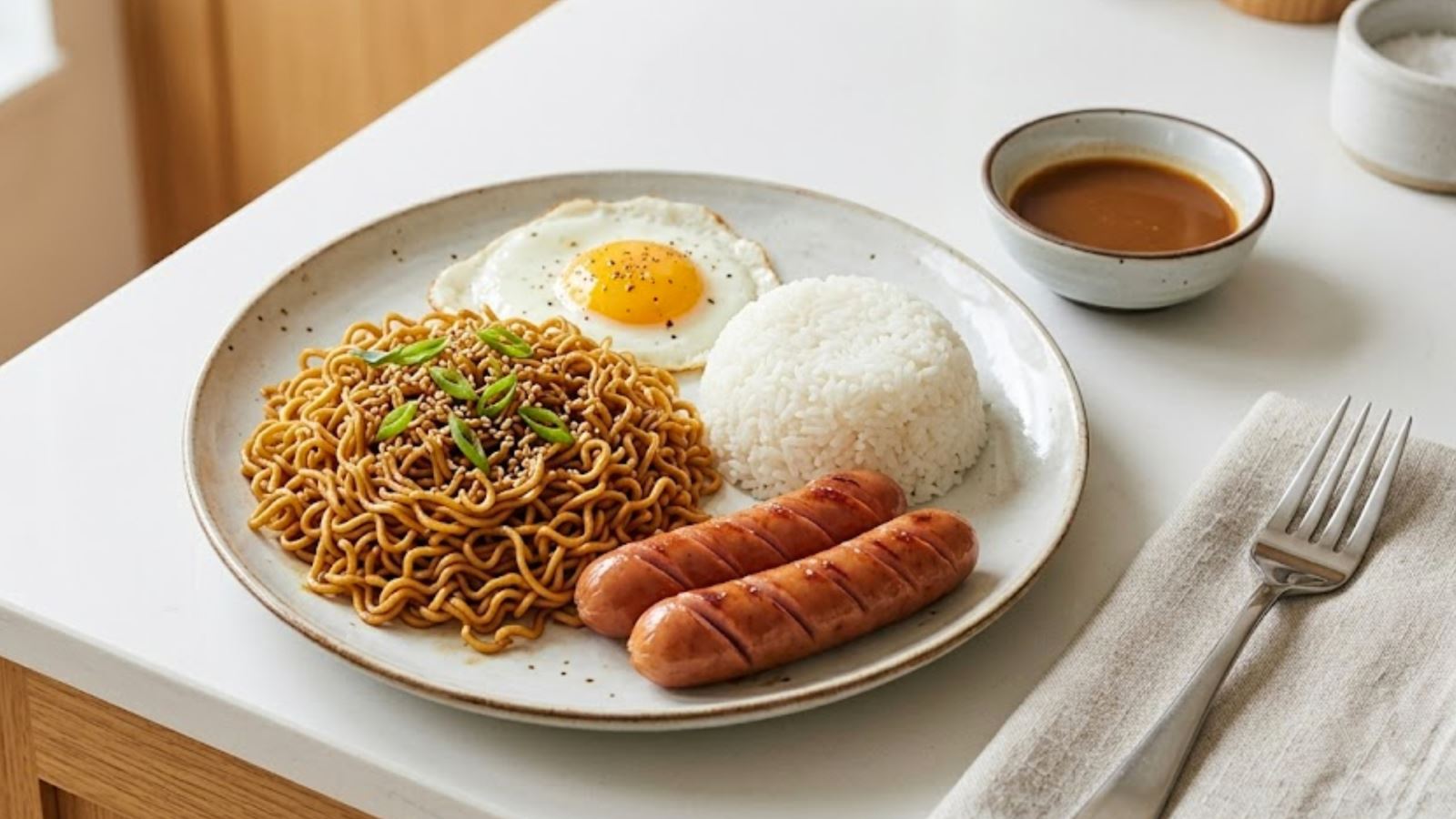
2. Your Child Eats Regularly but the Portions May Not Meet Their Needs
Even children of the same age can have different nutritional needs.
For example:
-
A child may eat three meals a day, but most of the meal consists of rice while protein-rich foods are limited.
-
A child may eat plenty of vegetables and fruit, but not enough energy- and protein-rich foods.
-
A child may eat enough at main meals, but their snacks are too small, resulting in an insufficient total nutrient intake throughout the day.
-
A child who is highly active and constantly running and playing may need more energy than a child who is less active.
-
A child may eat a lot but feel full quickly because they drink too much water or other beverages before meals.
Therefore, eating regular meals does not necessarily mean that a child is meeting their nutritional needs. Portions should be appropriate for the child’s age, body condition, and level of physical activity.
3. The Diet May Lack Variety
If a child’s menu regularly consists of only a few familiar foods, they may eat well but still not receive a wide range of essential nutrients.
Parents should rotate different foods such as meat, fish, eggs, shrimp, green vegetables, root vegetables, and age-appropriate fruits.
Changing the way food is prepared can also make mealtimes more appealing. Depending on the child’s age, parents can offer porridge, rice, soup, pasta, noodles, or other suitable dishes.
A varied diet not only provides a wider range of nutrients but also gives children opportunities to explore and become familiar with different foods.
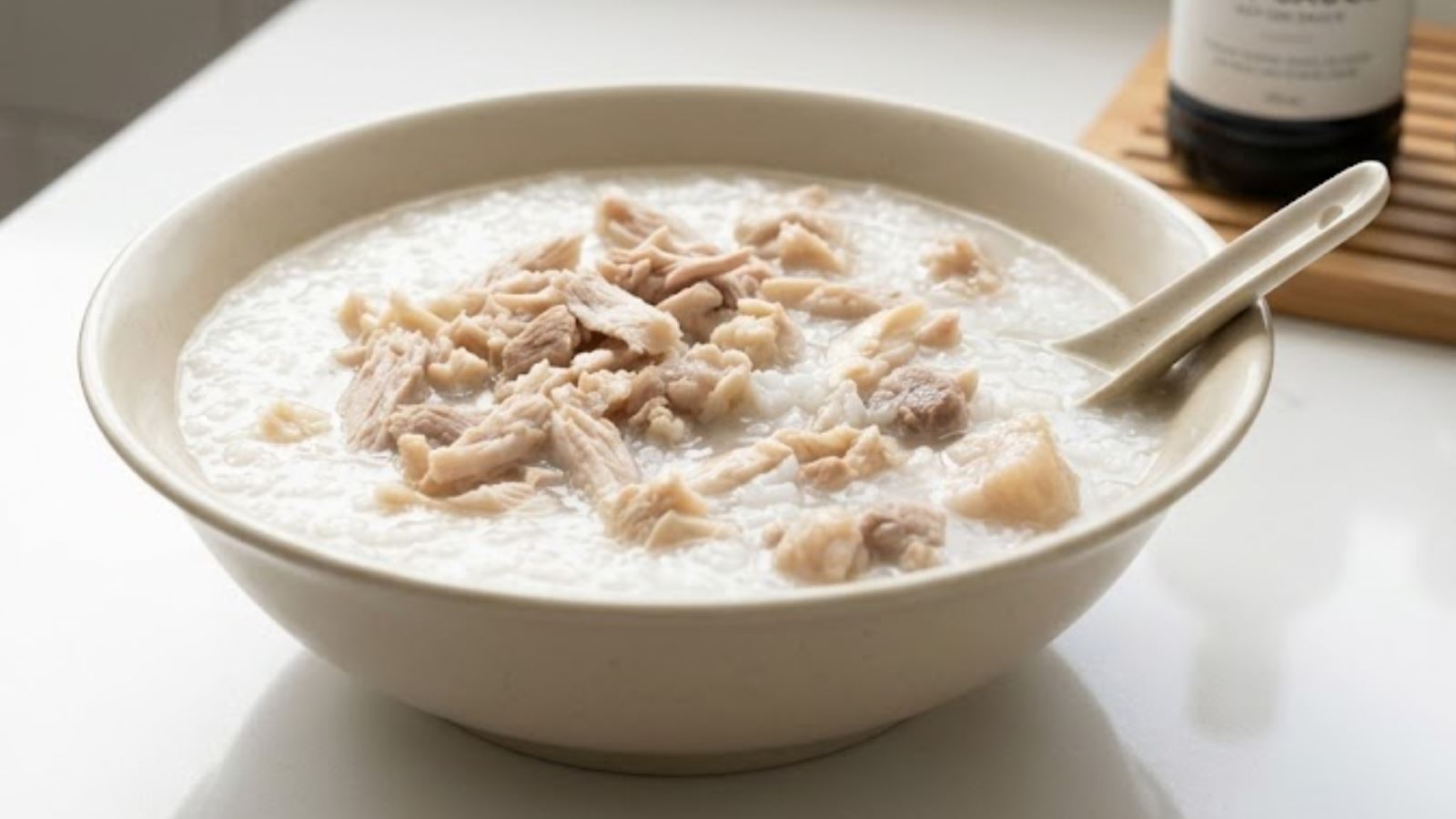
4. Nutrient Absorption May Be Affected
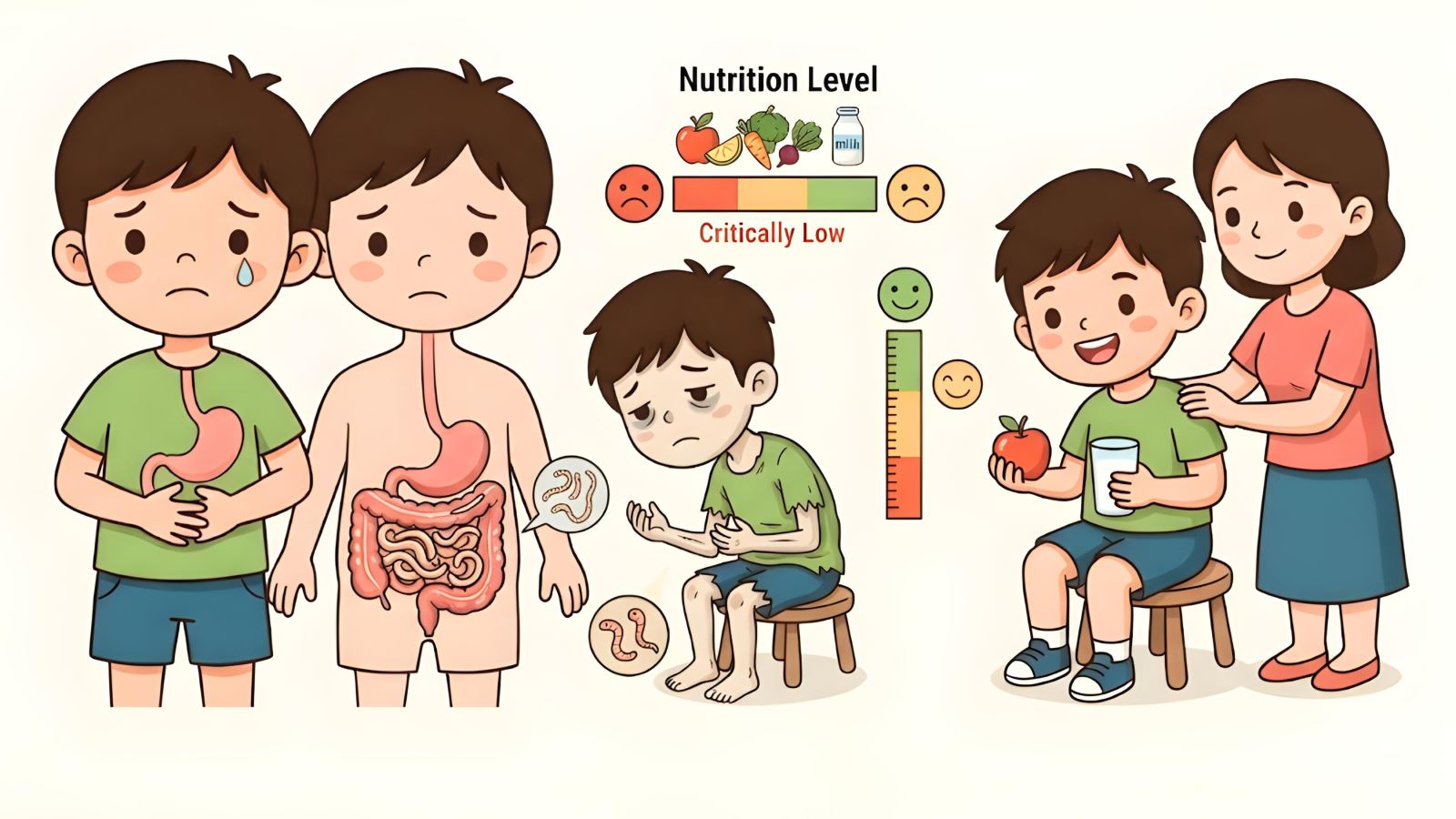
In some cases, a child may eat quite well but still gain weight slowly due to digestive or nutrient absorption issues.
Parents should pay attention if their child frequently experiences:
-
Bloating or indigestion.
-
Abdominal pain.
-
Persistent or recurring diarrhea.
-
Unusual changes in stool.
-
Good appetite but slower-than-expected growth.
If these symptoms persist, simply increasing the amount of food may not address the underlying cause. Parents should take their child to see a doctor for an appropriate evaluation.
5. The Child Frequently Gets Sick or Has Infections
When children frequently get sick, their bodies may require more energy to recover, while their appetite and food intake may also be affected.
Therefore, if your child eats a lot but remains skinny and frequently gets sick, parents should pay attention to the child’s overall health rather than simply trying to increase their food intake.
6. Your Child Is Highly Active and Burns More Energy
Some children are naturally very active. They enjoy running, playing, and participating in various physical activities.
These children may burn more energy throughout the day. If their nutritional intake does not meet their energy needs, their weight may increase slowly even though they have a good appetite.
For highly active children, parents should focus on providing a nutritious, varied, and energy-appropriate diet rather than forcing them to eat a large amount in one meal.
7. Your Child May Be Going Through a Period of Rapid Height Growth
There are periods when children grow in height faster than they gain weight. During these stages, a child may appear slimmer even though they are developing normally.
Therefore, parents should monitor both height and weight rather than relying on weight alone to assess their child’s growth and development.
When Should Parents Take Their Child to See a Doctor?
If your child is healthy, active, eats well, and is growing steadily, parents can continue monitoring their child’s diet and overall development.
However, parents should consider taking their child to see a doctor if:
-
Their weight does not increase for a prolonged period or they lose weight.
-
Their height or weight gain is slower than expected.
-
They frequently feel tired or have low energy.
-
They frequently experience abdominal pain, diarrhea, or other digestive problems.
-
They frequently get sick or have infections.
-
They eat well but their growth remains slower than expected.
When your child eats a lot but is still skinny, don’t immediately force them to eat more. Instead, look at the bigger picture: What are they eating? Is their diet balanced? Is the menu varied? How active are they? And is their growth progressing steadily?
Every child has their own growth pattern. What matters is not whether a child has the same body shape as other children, but whether they receive appropriate nutrition, proper care, and healthy support throughout each stage of development.